
Before we start, I want to ask you a question… do you already use automations in your company? If your answer is yes, what do you use them for? for communication with your customers? for your company’s internal processes?
And if you answered no…aren’t you interested in implementing a marketing automation platform to help you save time and increase sales?
Obviously, implementing an automation platform at this time is extremely essential, but I also know that choosing this tool is not easy. There are so many options, with such different functionalities and prices that it is normal not to know where to start.
And that’s exactly why I decided to do this post… to help you compare some of the main marketing automation platforms so you can choose the one that best suits your business.
Subscribe to Clientify’s blog
Do you like marketing, automation or just seeing how other people do things right? Then subscribe.
Every week we send you what we would like to receive: direct and actionable content.
What does a marketing automation platform do for your business?
A marketing automation platform today does much more than send a sequence of emails.
These tools are designed to work in an intelligent way, improving communication with customers and helping in the coordination of your teams’internal tasks.
Think of all the actions you can do by being able to connect email, WhatsApp, websites, online stores and social media: send automatic emails to all those who leave their contact as interested in a form, send a WhatsApp to all contacts who left their cart abandoned, send an internal notification to the billing team when a customer makes a purchase through ecommerce, generate tasks for sales reps to call contacts who registered in a campaign ….
Did you see? An automation platform turns your processes and communications into an organized flow between marketing, sales, support, billing, etc. so that nothing gets lost and you make the most of every opportunity.
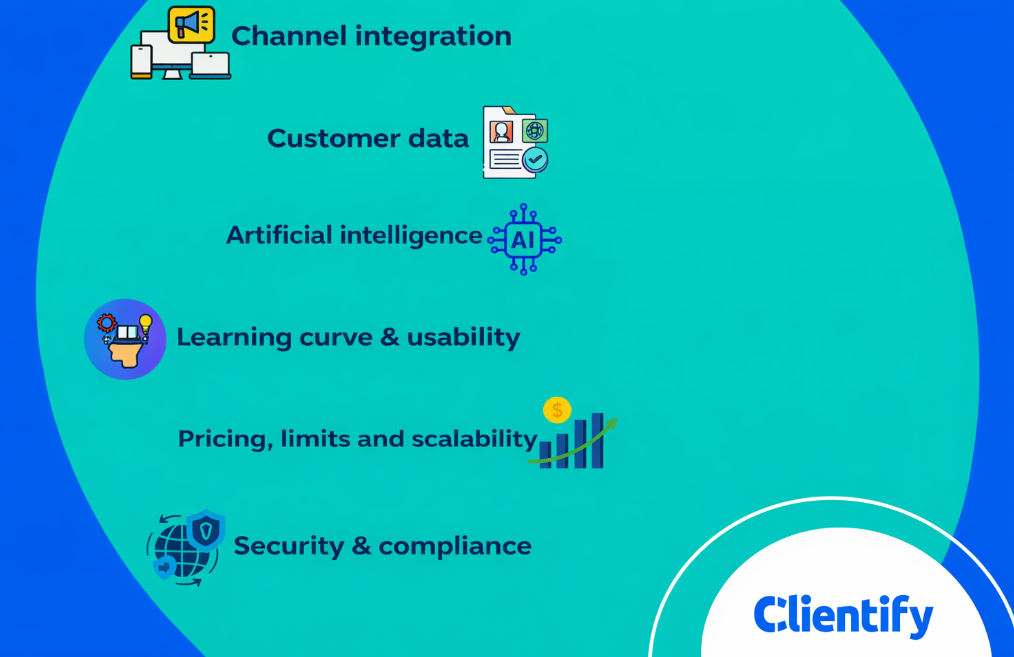
Key factors for choosing a marketing automation platform
When choosing an automation tool, it is not only the price or the basic functionalities that matter… There are also some key factors that you should evaluate so that your platform helps you optimize processes, improve communication with your customers and grow smoothly.
Integration with channels:
When choosing an automation tool, consider which channels you can integrate and how they are managed within the same flow.
Ideally, it should allow you to automate actions via email, WhatsApp and social networks. And the key is that you can design customer journeys that flow frictionlessly from one channel to another.
Customer data:
Data is an extremely important factor when it comes to automation.
Therefore, a good system should offer you the possibility to unify the information of your contacts, track their behavior and build segments according to interests or actions.
Useful AI:
Today, artificial intelligence is a key ally.
But not only to write or design, but to help you predict behaviors, recommend content or adjust the ideal time for each shipment.
Platforms that incorporate generative AIallow you to create copy and campaigns with agility, while predictive AI analyzes patterns and helps you anticipate the customer’s next steps.
Integrations and ecosystem:
A good tool should easily connect with your ecommerce, your analytics systems or even your telephony.
As mentioned before, marketing automation platforms should ideally allow you to automate actions across platforms and avoid duplicating efforts. The more native connections it has, or the more flexible it is through the API, the greater its ability to adapt to your business and grow with you.
Learning curve and usability:
It’s no use having a great tool if it takes months for your team to be able to use it; that’s why the learning curve and the ease of use are crucial factors.
Look for platforms with intuitive interfaces, visual flow builders and ready-to-use templates. In addition, technical support, documentation and available language can make all the difference in getting your automations up and running.
Pricing, limits and scalability:
The issue of prices is quite subjective since they vary among the different platforms: there are some that charge by number of contacts, others by volume of shipments or number of users.
Check the limits of each plan and make sure that the tool can grow with you without skyrocketing costs. Also check if it offers add-ons or advanced features that are only available in higher plans, as this may affect your budget in the medium term.
Security and compliance:
Don’t forget to check certifications and data protection policies. It is essential that the servers are in secure regions, preferably in the European Union if you operate under GDPR.
It is also worth checking if the platform offers multi-factor authentication, data encryption and granular permission controls to protect your customers’ sensitive information.
Comparison of the 7 best marketing automation platforms
Every business is different, and so is every tool…that’s why I prepared a summary of the main marketing automation platforms, where I highlight their functionalities, advantages and disadvantages, so you can find the one that will help you save time and increase your sales.
1- Clientify:
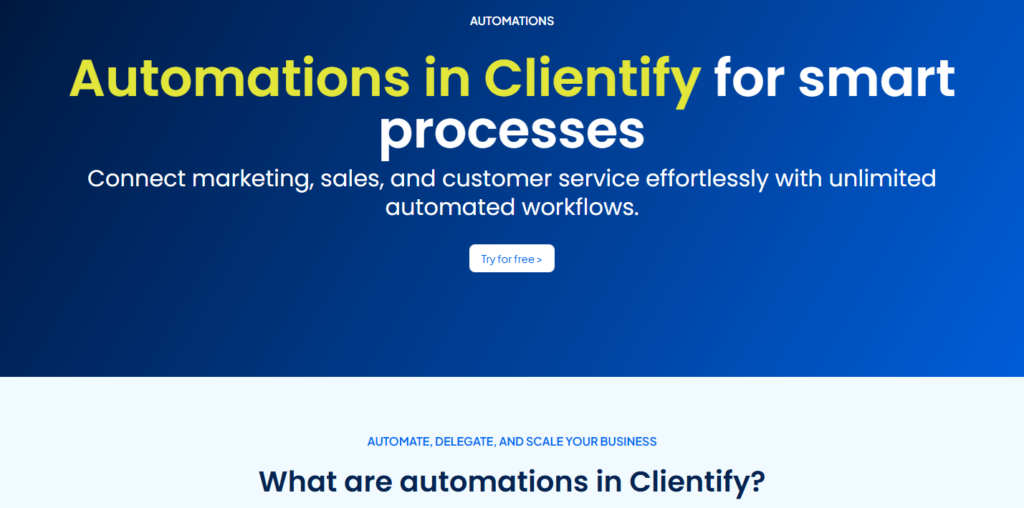
Clientify is known for being an all-in-one communication, sales and marketing platform with AI.
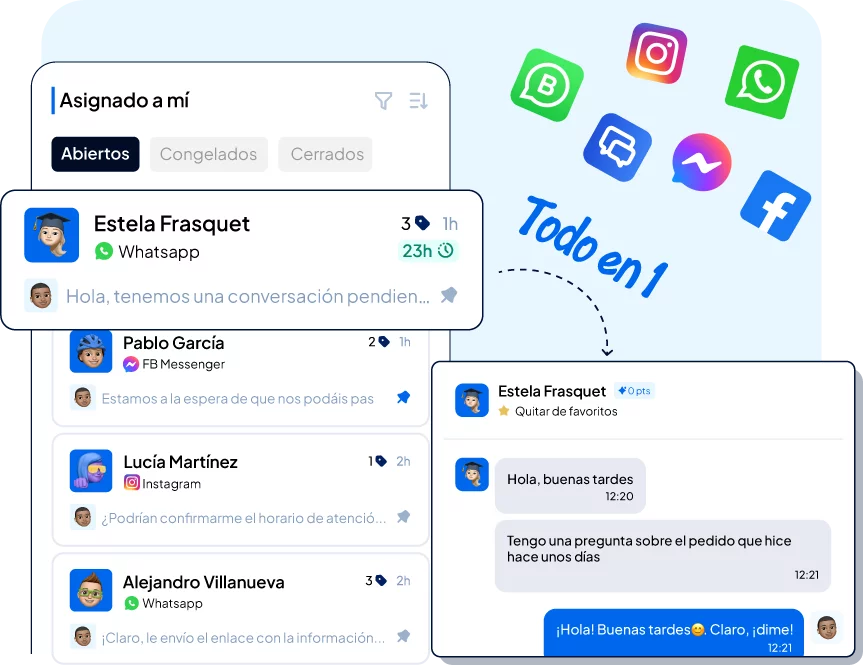
By having all channels such as email, WhatsApp, RRSS, Live Chat, website, ecommerce, etc. natively integrated into the CRM, all information, behavior, purchases, etc. of contacts and customers is centralized.
In this way, it has functionalities that allow you to automate: the sending of massive campaigns , follow-up flows by mail and WhatsApp, sending communications for purchases or abandoned carts, assignment of tasks and internal notifications, changes in lead scoring, behaviors with budgets, interactions on the web, dates or specific fields, changes in funnels and sales opportunities, etc.
Its visual editor is quite intuitive, allows workflows to be designed in minutes and also includes an AI that helps to answer messages through chatbots, create commercial proposals, landing pages, etc.
On the other hand, Clientify is fully adapted to GDPR and is mainly designed for teams working in Spanish-speaking markets.
2- ActiveCampaign:
ActiveCampaign is one of the most recognized marketing and automation platforms.
Its visual editor allows you to create journeysin which you can define each step of the customer’s journey with precise conditions and actions.
Among its main automatic functions is the creation and sending of emails and SMS, the segmentation, management and assignment of lead scoring for your contacts, the tracking of sales funnels and user behavior on the website… although it is known as an ideal and super powerful platform for email marketing.
Its main disadvantage is its learning curve, as it requires a lot of technical knowledge when implementing its CRM tool or other advanced features.
3- Brevo (formerly Sendinblue):
Brevo used to be a well-known email marketing platform called Sendinblue. But now it also allows you to send messages by mail, WhatsApp and SMS.
It has an easy-to-use dashboard that allows non-technical teams to create automated flows with ready-made templates.
In addition, it includes a basic CRM tool, segmentation marketing functionalities and real-time reporting tools.
The good thing about it is that it has a very flexible and accessible pricing model, which makes it ideal for SMEs looking to professionalize their marketing without investing large budgets.
4- HubSpot:
HubSpot is one of the most comprehensive tools on the market, ideal for those looking to centralize marketing, sales and customer service.
Its automation module allows you to createpersonalized flows based on behavior, lead scoring and funnel stages. In addition, it offers an integrated CRM, so marketing actions and sales opportunities are natively connected.
It includes powerful email marketing tools, advanced analytics and content creation.
Keep in mind that since it is such a solid and robust platform, the costs and complexity of use are also great; that is why it is one of the most chosen by large corporations.
5- Insider:
Insider is a platform focused on personalization and orchestration with the help of artificial intelligence. It is designed for companies that need to create personalized experiences at scale, combining channels such as web, app, email, SMS, push notifications and paid ads.
Its AI analyzes user behavior to anticipate the next step and deliver highly relevant messages at the right time. It also features dynamic segmentation tools, advanced A/B testing and interactive dashboards.
It is a tool with an extremely enterprise focus, aimed at organizations with a very large database and specialized marketing teams, mainly because its learning curve is very high and the level of customization it allows is impressive.
6- Klaviyo:
Klaviyo is positioned as one of the most powerful platforms for the ecommerce sector. Its main strength lies in personalization based on behavioral data: it analyzes purchase history, browsing and preferences to send relevant communications that increase conversion and loyalty.
It integrates natively with Shopify, WooCommerce, Magento and other platforms, making it easy to automate flows such as abandoned carts or personalized recommendations. In addition, it offers detailed reports, AI to optimize shipments and pre-designed templates for each stage of the customer lifecycle.
It has a fast learning curve and a very results-driven approach, which makes it very attractive for agile teams.
7-Mailchimp:
Although Mailchimp is one of the oldest tools on the market, today it is still one of the most widely used due to its simplicity and versatility.
It started as an email marketing software, but now offers automation, multichannel campaigns and analytics functionalities.
Its email editor is one of the most intuitive, its catalog of templates allows you to design professional campaigns without design knowledge and ensures a super high deliverability rate.
In addition, it offers advanced segmentation (albeit a bit complex), A/B testing and visual reporting .
It integrates with a large number of external tools, but this makes it fall short for more complex or complete automations.
| Platform | General Description | Main functions | Advantages | Disadvantages / Limitations | Ideal for |
|---|---|---|---|---|---|
| Clientify | All-in-one communication, sales and marketing platform with AI. | Integrated email, WhatsApp, RRSS, chat, ecommerce and CRM; workflows, campaigns, carts, tasks, lead scoring, AI in messages and proposals. | Centralizes all information, integrated AI, intuitive interface, GDPR compliance, support in Spanish. | Not focused on large global corporations. | Spanish-speaking companies looking for a CRM with full marketing automation. |
| ActiveCampaign | Recognized marketing automation platform with a strong focus on personalization. | Creation of flows with conditions, sending emails and SMS, segmentation, lead scoring, funnel tracking and web behavior. | Very powerful for email marketing, great depth in automations, integration with external CRMs. | High learning curve and requires technical knowledge to take advantage of advanced features. | Experienced automation companies looking for control and customization. |
| Brevo (formerly Sendinblue) | Evolved from an email marketing tool to a multi-channel solution. | Mail, WhatsApp and SMS campaigns, basic CRM, segmentation, real-time reporting. | Easy interface, ready-made templates, affordable prices, good option for SMEs. | Lower level of advanced automation and customization than other platforms. | SMEs looking to professionalize their marketing in a simple and economical way. |
| HubSpot | Comprehensive suite that connects marketing, sales and service in a single ecosystem. | Automated flows based on behavior, lead scoring, integrated CRM, email marketing, advanced analytics. | Powerful, scalable, native CRM, high level of customization and automation. | High cost and complexity, especially for small equipment. | Medium and large companies that want to centralize marketing and sales. |
| Insider | Enterprise platform with predictive AI for multichannel personalization. | Orchestration across web, app, email, SMS, push and ads; dynamic targeting, A/B testing, advanced dashboards. | Very high level of personalization, predictive analytics, ideal for omnichannel experiences. | High learning curve and high implementation cost. | Large companies or corporations with extensive databases and specialized equipment. |
| Klaviyo | Solution focused on ecommerce with strong data-driven personalization. | Shopping and navigation analysis, automated flows, recommendations, reports and AI to optimize shipments. | Native integration with Shopify, WooCommerce and Magento; easy to use, results-oriented. | Reduced coverage outside of ecommerce. | Online stores looking to increase conversion and loyalty. |
| Mailchimp | Veteran platform, versatile and easy to use. | Email marketing, basic automations, multichannel campaigns, A/B tests, visual reports. | Intuitive editor, professional templates, high deliverability, large number of integrations. | It falls short for complex or advanced multichannel automation. | Small companies or teams looking for simplicity and reliability in email marketing. |
Which type of marketing automation platform to choose? All-in-one vs. pure automation
As we saw in another of our posts, choosing a tool is not just a question of price. You have to think about what you really need and what you can do with it.
And choosing an automation solution is sometimes more complicated; you are faced with the question of whether to choose an all-in-one platform that combines CRM, communication, sales and marketing, or whether to go for a pure automation tool that is focused exclusively on marketing flows.
Both options have advantages and limitations, and the choice depends on your resources, your team structure and your medium-term objectives.
All-in-one platform:
Advantages of an all-in-one platform:
- Everything connected in one place: You avoid information silos between marketing, sales and other departments, allowing you to have a complete view of each customer and measure precisely which actions generate results.
- Reduced technical complexity: You don’t need to rely on external integrations or connect multiple tools to make data flow. This reduces costs and avoids errors due to desynchronization.
- Smarter automation flows: You can trigger automatic actions, internally as well as externally, directly from the CRM: for example, send a WhatsApp to the contact when their scoring changes or assign follow-up tasks to a salesperson after an interaction with your quote.
- Less learning curve: By not having to keep changing applications and interfaces all the time, teams learn faster.
- Greater consistency in communication: By using the same environment for all channels, it is easier to keep the tone, frequency and segmentation aligned with the overall strategy.
When an all-in-one platform can fall short:
- If your company has a highly technical marketing team that needs advanced and specialized tools for personalization, analysis or testing.
- Some platforms have closed systems that do not allow customization of automations or integration with proprietary developments. In that case, a more modular or open environment may be a better option.
Do it all with Clientify: capture, automate and close sales
Centralize all your communication, sales and marketing in one place. Try Clientify free and feel what it’s like to scale your business with AI without relying on experts.
Pure automation tool:
Advantages of a pure automation tool:
- Greater functional depth: These platforms usually offer extremely detailed testing, segmentation and campaign orchestration tools.
- Integration flexibility: They adapt better to other powerful systems.
- Advanced customization potential: Ideal if your strategy requires very specific rules, predictive behaviors or connectivity with multiple data sources.
When it can become a problem:
- Oversized stack risk: As you add more tools (CRM, marketing, reporting, messaging, etc.), maintenance costs and complexity increase.
- Dependency on external integrations: If a connection fails, data can get out of sync and affect campaigns or reports.
- Higher learning curve: Requires technical profiles or specialized support to set it up and maintain it in the long term.
Frequently Asked Questions
1. What can be automated within a marketing strategy?
Virtually any repetitive action that is part of the customer journey can be automated. From sending welcome emails or reminders, to lead classification, notifications to the sales team or personalized messages via WhatsApp.
Automation allows you to maintain constant communication without relying on manual tasks, and ensures that each contact receives the right message at the right time.
2. Can I use one automation platform for several channels at the same time?
Yes, most modern platforms allow you to manage several channels within the same strategy. You can combine emails, WhatsApp, SMS, social networks or forms and coordinate communication from a single flow.
This not only saves time, but improves the customer experience by maintaining a consistent conversation, no matter where they contact you.
3. Do these platforms comply with the GDPR?
The most established solutions do, but not all of them manage data on European servers. If you work in EU markets, make sure the platform allows you to collect explicit consent, delete data on request and store information securely within the European Economic Area.
How long does it take to implement an automation strategy?
It depends on the level of complexity. On average, a company can have basic flows up and running in one week, while a complete nurturing, scoring and reporting scheme can take three to six weeks.
Marketing automation platforms with pre-configured templates and flows greatly accelerate this process.
5. What is the difference between email marketing and marketing automation?
Email marketing consists of sending one-off campaigns, such as newsletters or promotions. Automation goes further: it allows you to create intelligent paths that react to user behavior, trigger messages across multiple channels and connect directly to your CRM to track and measure results.
6. Which metrics should be reviewed in the first month?
In the initial phase, focus on measuring open rates, clicks and conversions, but also on quality indicators such as engagement, average response time or qualified leads.
If the tool has AI or scoring, analyze which segments are generating better responses and adjust your flows based on that data.
Conclusion
So, after reading all this, let me ask you again…aren’t you interested in implementing a marketing automation platform to help you save time and increase sales?
If now your answer is yes, then it’s time to choose the best tool: analyze what your resources are, what your main channels are, what you want to achieve with these automations and determine which is the best platform to understand your customer, anticipate their needs and optimize each interaction.
And if you think it’s best to centralize all your marketing, contacts and communication in the same environment, without wasting time on configurations or relying on multiple tools, an all-in-one platform like Clientify may be the best option.
Sign up for a free trial, where you can design the automated flows you need to help your team keep selling more and better every day.