
Let’s say you’re in the B2B coffee business and you already have some traffic, conversations and interested people.
But now I want to ask you some questions…what would you do with all those prospects that come to you? Who follows up on them? How long does it take you to get back to them? Where do you get them and where do you contact them? What kind of messages do you send them?
A lot of questions…I know. But this is where many companies get stuck. And mind you, not because they don’t know how to sell, but because they don’t have a system in place to ensure that every prospect gets the same level of attention.
But the good thing about all this is that today there are tricks and tools that allow you to stop managing prospects by hand and start automating lead tracking, defining funnels and clear, orderly and scalable processes.
Subscribe to Clientify’s blog
Do you like marketing, automation or just seeing how other people do things right? Then subscribe.
Every week we send you what we would like to receive: direct and actionable content.
Why does manual tracking cause you to miss opportunities?
Never say never…. but the reality is that, from experience I tell you, if you sell coffee in the B2B market, it is impossible to close a sale with a single interaction.
Just think: you get a lead from the web, another one from a trade show, someone who writes to you via WhatsApp asking for information… you respond, send a proposal and continue with your day-to-day tasks.
Now that the prospect has the information, he will look for other suppliers, compare prices, evaluate volumes and delivery times.
So: what happened to that quote you sent a week ago? Do you know if it has been opened? If it has been reviewed internally? What if it got lost among the thousands of other emails? Who in your team is following up on it?
And well… it’s because of this manual follow-up that you start losing sales without even realizing it. Think that when there is no clear follow-up process, each prospect moves forward or slows down on their own, and that’s where you lose visibility on where the opportunity really is.
And depending on memory, time and the team’s workload is what causes many opportunities to be put on hold indefinitely, or worse, to be lost to a competitor who knew how to be there at the right time.
And beware, this is not just a feeling. A study published in Harvard Business Review, out of 2241 companies studied, 23% never responded to a web-generated lead, another 24% took more than 24 hours to do so…crazy, isn’t it? Missing half of the opportunities by not having a clear follow-up system.
How to automate lead follow-up in a B2B coffee company
Because automating lead follow-up is not about choosing a CRM that sends more messages. It’s about having a clear tool that ensures that each prospect receives attention, follow-up and context, even when the team is busy.
And precisely in B2B coffee sales, where closing is not usually immediate, having this process well defined makes the difference between opportunities that move forward and proposals that go cold without explanation.
So, here’s a step-by-step guide on how to start automating lead follow-up and not miss any opportunity due to lack of follow-up.
Step 1: Define an automatable sales funnel
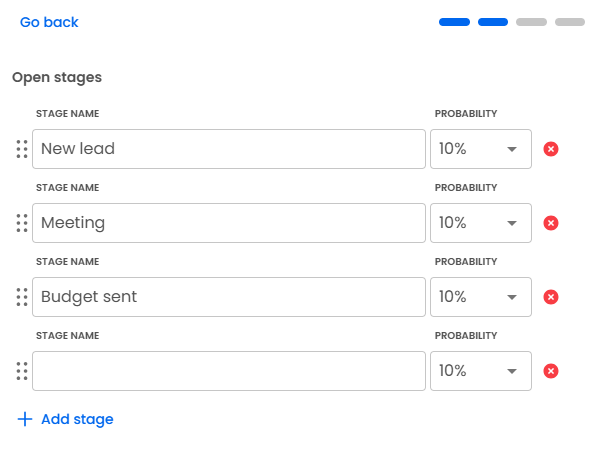
To get started, the first thing you should ask yourself is: how does a sale progress in your business? If you don’t have a well-defined funnel, you can’t automate anything, because the system doesn’t know when to start or what to do next.
An example of a funnel is:
- Enter a new lead (trade show, web, call, referral).
- You send him some samples or schedule a tasting
- Commercial proposal and quotation (price per kg, service conditions, machine, barista training)
- Negotiation (blend adjustments, volumes, financing or transfer of machinery)
- Customer activation (first closed order).
When defining this funnel, think of your customers’ usual path: first they show interest, they generally try the coffee, then they receive your proposal, enter into negotiations, and if all goes well, they become customers.
The good thing about implementing a CRM like Clientify is that this funnel is replicated in the tool. This allows you to have real visibility of all open opportunities, to know how many proposals have been sent, how many are under negotiation and where they are getting stuck.
In addition, it has triggers so that tracking does not depend on someone in particular and is activated automatically when something happens.
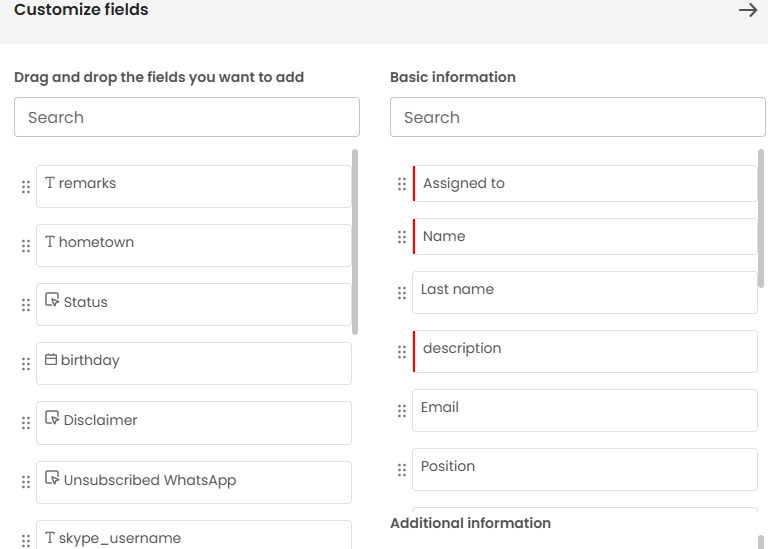
Step 2: Minimum lead data for automation to take place
Internally, we have found that if an automation fails, it is because of the prospect’s data.
Think that if the leads enter the CRM without a context, the follow-ups are going to be very generic. And in the B2B market, generic is ignored.
That’s why you need to define a minimum standard of information before moving forward with an opportunity…not to complicate the process, but to make it more effective.
Ask yourself what do you really need to know in order to have a relevant conversation with that prospect?
Normally, in the B2B coffee market, there are some data that make the difference: Knowing whether the customer is a coffee shop or an office completely changes the estimated volume; knowing their preferred contact channel tells you whether it makes more sense to write them by email or WhatsApp; and products of interest allow you to focus the conversation on what really matters to them from the first contact.
With these few but well-collected data, monitoring ceases to be general and becomes highly personalized and contextualized.
Step 3: Email or WhatsApp: choose the channel according to the type of customer.
Another common mistake is to think that all customers want to talk through the same channel. This is not the case.
Some decision-makers prefer email because they need to forward information, review it calmly or compare it internally. Others live on WhatsApp and expect a quick and direct response.
And the key is not to choose the best channel, but to choose the right channel for each type of customer:
- Email to provide context:
In more structured stores or offices, email works best for explaining the proposal, attaching information and keeping a more formal follow-up. - WhatsApp and its agility:
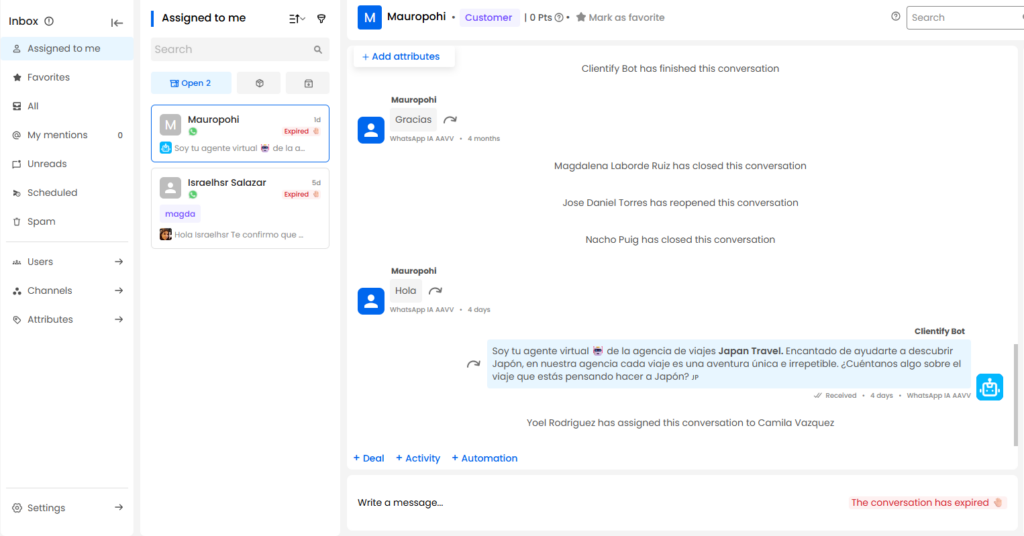
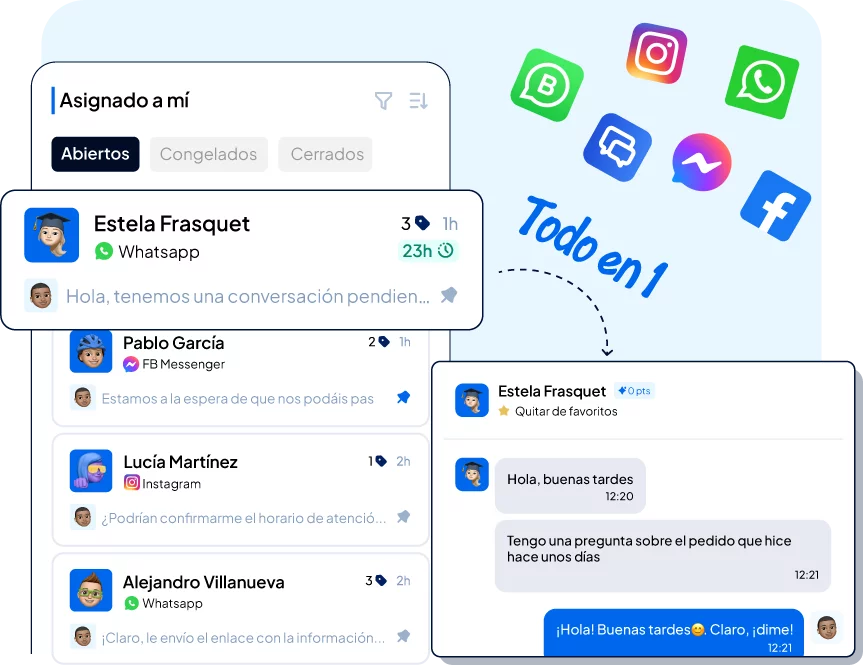
In independent coffee shops or more operational businesses, WhatsApp is usually the natural channel and speeds up the conversation. Of course, it must be integrated into the CRM to avoid clutter. - All leads, inside the CRM:
No matter…wherever they come from, leads should automatically enter the CRM, with the origin and basic data defined. Thus, the system automatically activates the different types of sequences in the appropriate channel.
Step 4: Define an automatic follow-up sequence for each stage of the funnel.
As already mentioned, when an all-in-one CRM like Clientify is implemented, follow-up is no longer improvised and becomes a process that is always followed.
Each stage of the funnel needs its own rhythm, its own message and its own objective. And when you define this in advance, you can automate much of the work without losing the human touch.
- When a new lead comes in, wherever it comes from, the goal is not to sell. It is to respond quickly, confirm interest and mark the next step. Here the automatic follow-up is useful so that no one is left unanswered and so that the lead feels that there is a serious company behind; and not just someone answering when he/she can.
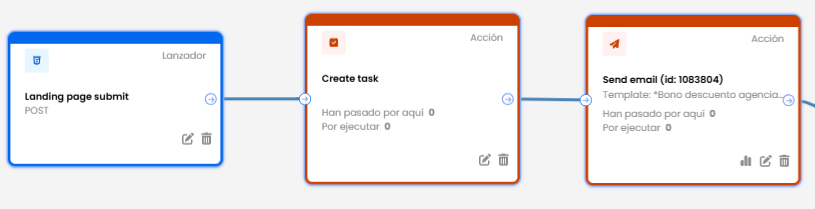
- In the sampling or tasting phase, the follow-up changes completely. It is no longer about introducing yourself, but about accompanying the experience. At this stage you can send reminders for the day and time of the tasting, ask for feedback and open a new conversation with questions that help you understand what they liked and what they didn’t like.
- At the time of sending the commercial proposal or the budget, the follow-up becomes critical. There are many variables that the prospect has to look at and it is very easy for the proposal to fall through the cracks. Therefore, defining an automatic sequence at this stage allows you to resume the conversation without seeming insistent, resolve common doubts and reinforce the value of your proposal before interest cools off.
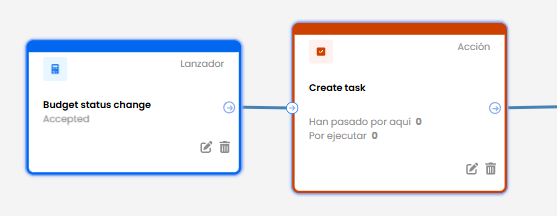
- If you have reached the negotiation stage, then the follow-up is no longer about insisting… but about fine-tuning some details. And that is why automations do not replace the salesperson, but they do provide support: reminders, tasks and base messages that ensure that the conversation does not get hung up between adjustments.
- And even if the lead has confirmed and paid for his first order, follow-up is still just as important. Automating this stage allows you to accompany the start-up, confirm that everything is correct, strengthen the relationship and lay the foundations so that this customer is not just a one-off sale, but an active and recurring account.
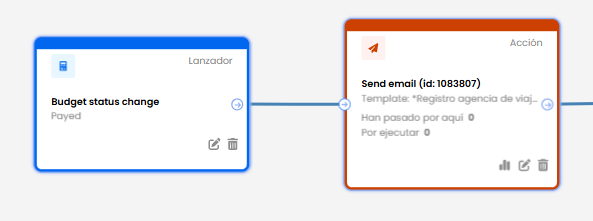
The key to this whole step is to understand that follow-up is not one-time, it is progressive.
Each stage of the funnel has a different objective and, when you define an automatic sequence for each one, the CRM stops being a simple record of contacts and becomes the tool that moves your sales forward without depending on the team’s memory.
Do it all with Clientify: capture, automate and close sales
Centralize all your communication, sales and marketing in one place. Try Clientify free and feel what it’s like to scale your business with AI without relying on experts.
Best practices for selling coffee in the B2B marketplace
As we said at the beginning, automating does not mean sending more messages. It means sending more personalized messages at the right time.
And in B2B coffee sales, selling better goes through:
- Talk about the customer’s business:
The quality of your coffee matters, obviously…but so does cost per cup, turnover, customer experience and after-sales service. When your follow-up focuses on these issues, the customer feels that you understand and always responds. - Adapt the message according to the type of customer:
Selling to a coffee shop is not the same as selling to an office. Here priorities, language and arguments change. But the good thing is that you don’t need to redo the whole process: with a well-configured CRM, this adjustment can be automated with no extra effort. - Measure follow-up to improve results:
Remember, without data there is no improvement. Analyzing response rate, time to closure or how many proposals move forward allows you to optimize sequences and demonstrate that the process really works.
Conclusion
You see…when this whole process is within a single CRM, change can be seen.
With Clientify you have a super clear pipeline , well-defined and segmented data, self-activating automations , centralized communication channels and much more. This way your teams have complete visibility so they know what to do and when to do it.
So remember, if your company sells coffee in the B2B sector and you feel that many opportunities fall by the wayside, the solution is not to generate more leads. It’s to make sure none of them are lost.
So take advantage of Clientify’ s free trial and start automating your lead tracking right now.